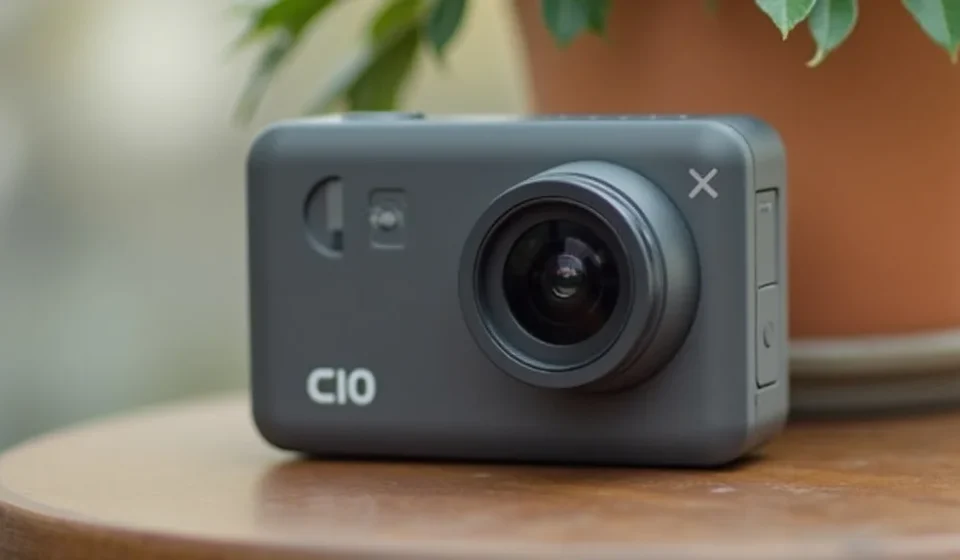

Picture this: you’ve just unboxed your shiny new Yi Action Camera, brimming with excitement to capture your adventures. But then, you’re faced with the dreaded yi action camera manual. Does it feel like a foreign language? Fear not! This guide is here to simplify everything, breaking down the essential features and functions in a way that’s easy to grasp. You’ll learn how to take amazing photos and videos, customize your settings, and troubleshoot common issues. By the end, you’ll feel confident using your camera to its fullest potential, capturing memories with ease. Prepare to transform from a beginner to a pro, maximizing your camera’s potential.
Key Takeaways
- Discover the essential functions of your Yi Action Camera Manual.
- Learn how to set up your camera for optimal video and photo quality.
- Explore the various shooting modes and how to use them for different scenarios.
- Understand the camera’s settings and customize them for your needs.
- Troubleshoot common problems and find solutions.
- Master basic video editing for your camera’s footage.
Getting Started With Your Yi Action Camera
Before you start filming epic moments, it’s key to become familiar with the basics. This involves understanding the camera’s physical components, like the buttons, ports, and screen. We’ll explore the initial setup, ensuring the camera is ready to go. You will learn the importance of charging the camera’s battery and inserting a compatible microSD card, a vital step to storing all of your photos and videos. This section equips you with the foundational information necessary for a smooth start to your action camera journey.
Camera Components and Their Functions
Your Yi Action Camera has several physical components working together. Familiarizing yourself with these is critical to effectively using the camera. On the front, you’ll find the lens and a small display screen, showing information about settings and modes. On the top, you’ll likely find a power button and a record button. The back might have a larger touchscreen, depending on your model. Ports, such as a USB port for charging and transferring files, are usually located on the side. Understanding these components makes operating the camera more intuitive.
- The Lens: This is where the magic happens, capturing light and forming the image. Keep it clean and free of obstructions.
- The Buttons: Power and record buttons offer quick access to core functions.
- The Screen: Displays your settings and live view.
- Ports: The USB port handles charging and data transfer.
Initial Setup and Preparation
The first step involves charging the battery fully. Next, insert a compatible microSD card. This card is your camera’s memory, so selecting the right one is important. Formatting the card within the camera ensures compatibility and optimizes performance. After these steps, you will be set to begin recording videos or capturing photos. Consider downloading the Yi app for your smartphone to control the camera remotely and transfer your files.
- Charge the battery using the provided USB cable. A full charge ensures you can capture a lot of footage.
- Insert a microSD card. Ensure it’s compatible with the camera (check the yi action camera manual for recommended specs).
- Format the microSD card within the camera’s settings. This process optimizes the card for your camera’s file system.
- Download and install the Yi app for your phone to connect and control the camera wirelessly.
Understanding the Yi Action Camera User Interface
The user interface, usually displayed on a small screen or touchscreen, provides the means to control your camera. This section details how to navigate the menus, adjust settings, and switch between modes. You will learn how to access the camera’s settings menu, where you can modify things like resolution, frame rate, and image stabilization. Understanding the UI is key for accessing all features. You will feel comfortable setting up your camera.
- Powering On and Off: Learn how to correctly turn the camera on and off.
- Navigating the Menus: Learn how to access and find camera settings.
- Selecting Shooting Modes: Explore the photo, video, and other shooting options.
- Customizing Settings: Discover how to adjust settings.
Exploring the Shooting Modes
The Yi Action Camera offers a range of shooting modes, allowing you to capture different types of content. The main modes are photo and video, with each having different settings to modify your final result. This section explores these modes, explaining how to select the best mode for your situation, whether it’s capturing a stunning landscape or recording fast-paced action footage. We’ll explore the creative possibilities, like time-lapse and slow-motion.
Video Mode: Capturing Action
Video mode lets you record moving images. Within this mode, you can control the resolution (the size of the video image), the frame rate (the number of frames per second), and other settings to tailor your videos to your needs. Higher resolutions and frame rates yield better quality. Setting up video mode is easy to achieve by adjusting the camera settings as per your goal.
- Resolution: This affects the image quality. Higher resolutions (like 4K) provide more detail but consume more storage space.
- Frame Rate: This impacts how smooth your video looks. Higher frame rates (like 60fps or 120fps) are better for capturing fast action and creating slow-motion effects.
- Field of View (FOV): You can choose between different field of view options, such as wide, medium, or narrow.
- Video Stabilization: Turns on stabilization to reduce shakiness.
Photo Mode: Capturing Still Images
Photo mode allows you to capture still images. Like video mode, you can adjust various settings. You can control the image resolution, which will affect the picture’s quality. Other settings, like ISO and white balance, allow you to adjust how the camera captures light and color. With these settings, you’re set to get the best photo possible.
- Resolution: Set the image resolution to suit your needs. Higher resolution images are suitable for printing or editing.
- ISO: Adjusts the camera’s sensitivity to light. Use lower ISO values for brighter conditions.
- White Balance: This will adjust the color balance of your photos.
- Burst Mode: This allows you to take a sequence of photos quickly, capturing fast action.
Advanced Shooting Modes
Beyond video and photo mode, your Yi Action Camera offers other modes for creative effects. Time-lapse mode creates videos from a series of photos taken over time, perfect for capturing sunsets or clouds moving across the sky. Slow-motion mode captures video at a high frame rate, letting you slow down fast action for dramatic effects. These modes expand your creative options.
- Time-Lapse: This creates a video from a series of photos taken over a set period.
- Slow-Motion: Record video at a high frame rate (such as 120fps) to create slow-motion effects.
- Loop Recording: Continuously records video, overwriting the oldest footage when the storage card is full, useful for dash cam purposes.
- Burst Mode: This will help you take multiple pictures in a short time.
Configuring Settings for Optimal Performance
Customizing your camera’s settings allows you to get the best results for your needs. This involves adjusting options related to video quality, image quality, and camera behavior. We will explore each setting and explain what it does and how to use it. Configuring your camera ensures the quality and performance you expect. We will also discover the best settings to use based on your activity and goals.
Video Settings
Video settings allow you to control the quality and behavior of your videos. Resolution, as mentioned, sets the detail level in your videos. Frame rate impacts how smooth the motion looks. Field of view affects the amount of the scene captured. Understanding and configuring these settings, based on the environment and desired effects, is essential.
- Resolution: Choose between options like 4K, 2.7K, 1080p, and 720p. The higher the resolution, the more detailed the video.
- Frame Rate: Select the appropriate frame rate for your videos. Higher frame rates are great for slow motion.
- Field of View: Decide on a wide or narrow field of view. A wide field captures more of the scene.
- Video Stabilization: Enable or disable video stabilization to reduce shakiness.
Photo Settings
Photo settings impact the quality and characteristics of your still images. The resolution setting determines the level of detail. ISO controls the sensitivity to light, and white balance corrects color casts. Understanding these settings allows you to optimize your images. Your photos will be beautiful with the proper settings.
- Resolution: Select the image resolution, which will influence image detail.
- ISO: Adjust the ISO setting to control the camera’s sensitivity to light. Lower ISO values are ideal for bright conditions.
- White Balance: Correct the color balance in your photos.
- Exposure Compensation: You will adjust the brightness of your images by adding or subtracting exposure.
General Camera Settings
General camera settings relate to overall camera behavior. You can adjust the date and time, change the language, format the microSD card, and control power-saving features. Modifying these settings enhances your overall experience.
- Date and Time: It is important to set the correct date and time for file organization.
- Language: Select your preferred language for the camera menu.
- Format SD Card: Format the SD card within the camera to clear it.
- Power Saving: Configure the auto-off settings and screen saver to extend battery life.
Troubleshooting Common Issues
Even with the best preparation, you might encounter issues with your Yi Action Camera. This section covers some common problems and provides practical solutions. We’ll explore troubleshooting tips, such as checking for low batteries or problems with the microSD card. Understanding these solutions will help you resolve issues and get back to recording your adventures.
Camera Won’t Turn On
If your camera will not power on, there are a few reasons that can be tested. First, check the battery level. Make sure that your camera is fully charged. If the camera still won’t turn on, try a different charging cable or wall adapter to rule out a faulty connection. In some cases, the camera may have frozen. Try removing the battery (if possible) and reinserting it.
- Low Battery: Ensure the camera is fully charged.
- Faulty Charging Cable: Try using a different cable or adapter.
- Frozen Camera: Try removing the battery or holding down the power button for an extended period.
Issues With the MicroSD Card
MicroSD card issues are a common cause of problems. If your camera gives an error message, it could mean that your SD card is corrupted or is not compatible. First, make sure you are using a compatible microSD card, check the specifications listed in the yi action camera manual. If the card is compatible, try formatting it within the camera. The formatting process will erase all data, so back it up. If that does not work, replace the SD card.
- Incompatible Card: Ensure the microSD card meets the camera’s specifications.
- Corrupted Card: Format the card within the camera.
- Full Card: Delete files from the card or
Video or Photo Quality Problems
Poor video or photo quality can result from various factors. If the video is blurry, ensure the lens is clean and the focus is set correctly. If the pictures are too dark or too bright, check the exposure settings and adjust them. In addition, always check your settings such as the resolution, frame rate, and other settings. You can always review the manual if problems persist.
- Blurry Images: Clean the lens and ensure the focus is set correctly.
- Incorrect Exposure: Adjust the exposure settings or ISO.
- Poor Video Quality: Double-check the resolution, frame rate, and other video settings.
Basic Video Editing with Your Footage
Now that you’ve recorded amazing video, it is time to edit it. This section will introduce basic video editing concepts. The goal is to provide fundamental skills to create polished videos. We will cover the essentials, such as trimming videos, adding transitions, and making simple edits. We will introduce you to several software options that you can use.
Importing and Organizing Your Footage
The first step involves importing your footage from the Yi Action Camera to your computer or mobile device. Organize your files into logical folders and label them with descriptive names. This process helps you keep track of your footage. With good organization, your editing process will be simpler and more efficient. Create a folder system to store your media.
- Connect your camera to a computer via USB or remove the microSD card and insert it into a card reader.
- Copy the video files from the camera to your computer.
- Organize the files into folders.
- Back up your files.
Basic Editing Techniques
Fundamental editing techniques can significantly improve your videos. Trimming involves cutting out unwanted parts of the footage. Adding transitions, such as fades, smooths the flow between clips. Combining clips allows you to create a longer story. These methods are easy to apply and increase the quality of your videos. Practice these fundamental techniques, and the quality of your video will improve.
- Trimming Clips: Learn to cut and remove unwanted sections.
- Adding Transitions: Use transitions, like fades or dissolves, to smoothly connect clips.
- Combining Clips: Arrange clips into a sequence to create a narrative.
- Adding Music or Sound Effects: Enhance the audio to set the mood of your videos.
Software Options for Video Editing
You can use different software to edit your videos. The choice of software depends on your needs, your experience, and the devices you’re using. Simple apps for mobile devices, such as the Yi app, are easy to learn and offer basic editing features. Many free and open-source programs for computers also offer more tools for advanced editing. Choosing the right software is a step toward making your videos.
- Yi App: Simple mobile editing.
- Free Video Editors: Explore free options like DaVinci Resolve or OpenShot for your computer.
- Paid Video Editors: Explore options such as Adobe Premiere Pro.
Common Myths Debunked
Myth 1: Action Cameras Are Only for Extreme Sports
Reality: While action cameras are great for sports, they can be used for so many situations. They are small, versatile, and excellent for everyday life. Whether you’re recording family vacations, vlogging, or simply capturing everyday moments, these cameras are helpful.
Myth 2: Higher Resolution Always Means Better Video Quality
Reality: Resolution is one part of the equation, but not the only one. Factors like frame rate, image stabilization, and lighting play a bigger role. If you are recording footage in low light with a high resolution, the quality will not be that good. A balance of settings is critical.
Myth 3: You Need Expensive Software for Editing
Reality: There are many free options that are very helpful, such as DaVinci Resolve. Many open-source and free programs offer solid editing tools for all experience levels. You can achieve fantastic results without spending money.
Myth 4: Action Cameras Are Difficult to Use
Reality: Most action cameras are made to be used by anyone, with very few required steps to learn. The Yi Action Camera is simple to set up and use. After you read the yi action camera manual, you will get the hang of it right away. Simple features and options are available.
Myth 5: All MicroSD Cards Are the Same
Reality: Not all microSD cards are equal. Your camera requires a compatible card that matches its specifications. Consider write speed, storage capacity, and speed class to ensure good performance. A bad card will reduce performance.
Frequently Asked Questions
Question: What is the best resolution setting for my Yi Action Camera?
Answer: It depends on your needs. 4K is best for high detail, but consumes more storage. 1080p is a good balance between quality and file size.
Question: How do I transfer files from my camera to my computer?
Answer: You can connect your camera directly using a USB cable or remove the microSD card and insert it into a card reader.
Question: My videos are shaky. How can I fix this?
Answer: Enable video stabilization in the camera settings. You can also use a gimbal or other stabilization gear.
Question: What’s the purpose of the different shooting modes?
Answer: Each mode is designed for specific situations. Video mode is for recording moving images, photo mode is for still images, and time-lapse creates videos from photos taken over time.
Question: Where can I find the Yi Action Camera Manual?
Answer: You should find a paper manual in the box. You can also visit the manufacturer’s website or do a search online.
Final Thoughts
You have now explored the essential aspects of your Yi Action Camera Manual. You’ve discovered how to set up your camera, navigate the different modes, and configure the settings for optimal performance. You have explored the troubleshooting tips for common issues. Now, you’re ready to take stunning photos and videos, recording your life’s adventures with confidence. Remember, the best way to master your camera is to use it. Experiment with different settings, explore various shooting modes, and don’t be afraid to make mistakes. Each shot you take will improve your skills. Embrace the fun, explore your surroundings, and let your creativity soar.


