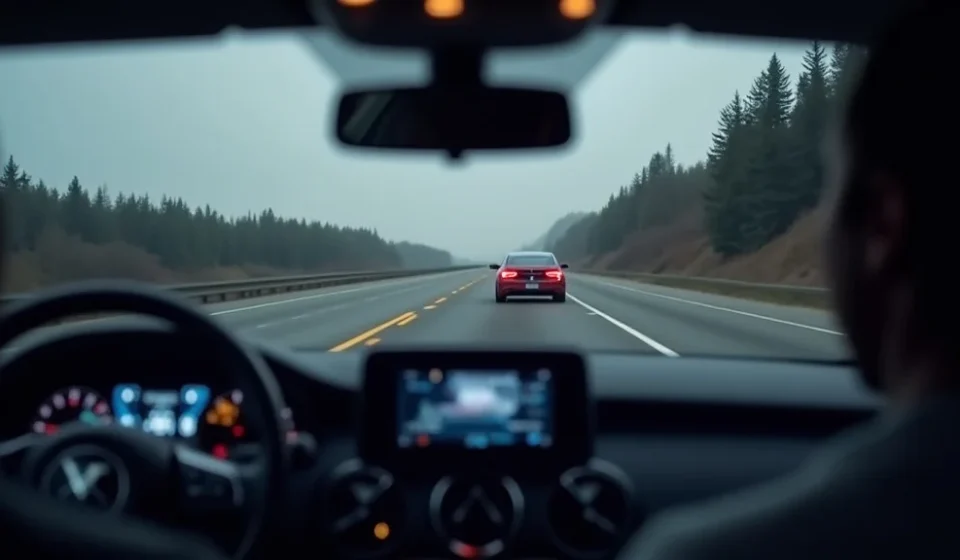

Picture this: you’re pulling out of a tight parking space, and suddenly, CRASH! A hidden object appears out of nowhere. Wouldn’t it be great if your car could “see” things you can’t? That’s where the z automotive front camera comes in. This blog post explores everything about this essential technology. You’ll learn how it works, what it does, and why it’s becoming so important for car safety. By reading on, you’ll gain a deeper appreciation for modern automotive technology and its role in protecting drivers. You’ll also learn the benefits of this great technology.
Key Takeaways
- The z automotive front camera is a crucial part of modern driver-assistance systems.
- It uses sophisticated technology to “see” and interpret the road ahead.
- Different types of cameras offer various features and levels of safety.
- These cameras significantly improve driver safety by detecting potential hazards.
- They play a key role in automated driving functions.
- The technology is constantly improving to become even more efficient.
Overview of the Z Automotive Front Camera
The z automotive front camera is more than just a camera; it is a vital part of a car’s safety and assistance systems. Positioned typically behind the windshield, it’s designed to constantly monitor the road, traffic, and surrounding environment. This information is processed in real time to provide drivers with critical information and support various features. The primary function of a z automotive front camera is to assist the driver and prevent accidents by providing information about the environment ahead of the vehicle. This includes detecting objects, other vehicles, and lane markings.
Essential Components and Functionality
At the core of the z automotive front camera is its image sensor. This sensor is what captures the images of the road. High-resolution sensors are standard in modern cameras to capture as much detail as possible. The camera also includes lenses, processing units, and communication interfaces. The lenses focus the image onto the sensor. The processing unit interprets the images, and the communication interfaces allow the camera to send data to the car’s computer systems. The data the camera captures is then analyzed by the vehicle’s computer systems, which allows it to provide helpful features like lane departure warning and automatic emergency braking.
- Image Sensor: The primary component responsible for capturing the visual data, much like the film in a traditional camera. The quality and resolution of the image sensor directly impact the camera’s ability to “see” details on the road. Higher resolution allows the camera to identify smaller objects and features, enhancing the effectiveness of safety systems. Image sensors can be various types, including CMOS (Complementary Metal-Oxide-Semiconductor) and CCD (Charge-Coupled Device), each with strengths and weaknesses in terms of sensitivity, speed, and cost.
- Lenses: They focus the light onto the image sensor, determining the field of view and the clarity of the image. The lenses must be designed for the specific needs of automotive applications, often using specialized coatings to reduce glare and distortion caused by environmental conditions like sunlight or rain. The type of lens also influences the camera’s ability to perform functions such as recognizing lane markings and identifying pedestrians.
- Processing Unit: The brain of the camera system, which interprets the images captured by the sensor. This unit uses algorithms to analyze the images, identify objects, and determine their position and movement. This involves processes such as object detection (e.g., cars, pedestrians, signs), lane keeping, and traffic sign recognition. The processing power required increases with the complexity of the features offered by the camera system.
- Communication Interfaces: These allow the camera to communicate with the rest of the vehicle’s systems. Data is sent to the car’s central processing unit (CPU) to inform features like adaptive cruise control or automated emergency braking. These interfaces need to be reliable and fast, because the safety features of the car depend on data speed and accuracy.
Data Interpretation and Processing
After the camera captures images, the real work begins with data interpretation and processing. Advanced algorithms are used to make sense of the visual data. The processing unit in the camera system uses various techniques like object recognition, lane detection, and scene analysis. The system differentiates between vehicles, pedestrians, cyclists, and lane markings. This allows it to make informed decisions and trigger actions such as activating the automatic emergency braking system. The processing unit is critical in the performance of the camera.
- Object Detection: This is the ability of the camera system to identify and classify objects in the image. This typically involves training the system to recognize specific objects, such as cars, pedestrians, cyclists, and traffic signs, using large datasets. The system uses machine learning algorithms, particularly deep learning models, to analyze the visual features and accurately identify each object’s position and size in the scene.
- Lane Detection: The camera identifies the lane markings on the road to assist with lane keeping assist and lane departure warning features. This involves analyzing the image for specific patterns and colors that match the lane markings. The system uses computer vision algorithms to track the lane markings and determine the vehicle’s position within the lane. This helps the car maintain its position.
- Scene Analysis: The camera analyzes the entire scene to give the driver a better understanding of their environment. This involves recognizing different elements, such as traffic lights, other vehicles, and road signs. The system might use a combination of techniques, like object detection, lane detection, and mapping, to create a detailed map of the driving environment.
- Fusing Data with Other Sensors: Often, the z automotive front camera is not the only sensor in the car. It is combined with other sensors, such as radar and ultrasonic sensors, to provide a more detailed and accurate picture of the vehicle’s surroundings. Data from different sensors are merged to provide a detailed view of the environment.
Applications of Z Automotive Front Cameras
The applications of a z automotive front camera go beyond basic driving assistance; these cameras are essential for enhancing driver safety. They support many features that make driving easier and safer. The ability of the camera to see the road is a key part of various features, from adaptive cruise control to automatic emergency braking. They are a core component of advanced driver-assistance systems (ADAS) in modern vehicles. These cameras are quickly becoming essential for making cars safer.
Safety Features Enabled by the Front Camera
The main purpose of a z automotive front camera is to boost driver safety. Features like automatic emergency braking (AEB), lane departure warning (LDW), and adaptive cruise control (ACC) are all dependent on this technology. The front camera is the “eyes” of these safety systems, allowing the car to identify and respond to potential dangers on the road. These features improve driver safety and help prevent accidents. These are valuable in all types of driving situations.
- Automatic Emergency Braking (AEB): AEB uses the front camera to detect potential collisions with other vehicles or pedestrians. When a potential collision is detected, the system warns the driver. If the driver does not respond, the system will apply the brakes automatically. This helps to prevent or reduce the severity of a collision.
- Lane Departure Warning (LDW) and Lane Keeping Assist (LKA): LDW uses the front camera to monitor the vehicle’s position within its lane. If the car starts to drift out of its lane without the driver signaling, LDW will alert the driver. LKA takes the features one step further, actively steering the vehicle back into its lane.
- Adaptive Cruise Control (ACC): ACC uses the front camera to keep a set distance from the vehicle ahead. The system automatically adjusts the car’s speed to maintain a safe distance. This is particularly helpful in traffic.
- Traffic Sign Recognition (TSR): TSR uses the front camera to identify traffic signs. The system displays speed limits and other important information to the driver. This helps drivers to keep updated with the traffic regulations, which is especially helpful on unfamiliar roads.
Assistance Functions and Driver Convenience
The front camera not only offers safety features but also assists with driver convenience. Features such as automatic high beams, parking assistance, and traffic jam assist help in making driving easier and less stressful. The camera helps with everyday driving and reduces the burden on drivers. These features greatly improve driving convenience.
- Automatic High Beams: The front camera can detect oncoming vehicles and automatically switch between high and low beams. This prevents drivers from blinding oncoming traffic, while also maximizing visibility. This automation reduces the need for the driver to manually switch between high and low beams.
- Parking Assistance: The front camera can be used to provide visual aids while parking. It provides a view of the area in front of the car, which helps drivers maneuver into parking spaces safely and accurately. Some systems also provide a 360-degree view.
- Traffic Jam Assist: This is an extension of adaptive cruise control that works in stop-and-go traffic. The front camera, with other sensors, helps the car to automatically steer, accelerate, and brake in traffic jams, reducing driver fatigue. This is especially helpful in heavy traffic conditions.
- Driver Monitoring Systems: Some front cameras work with the interior cameras to monitor driver behavior. The system detects signs of fatigue, distraction, or drowsiness by tracking the driver’s eye movements. When signs are observed, the system provides alerts to the driver.
Types of Z Automotive Front Cameras
The evolution of z automotive front cameras shows how the technology has evolved to provide different functionalities. They are available in various types, depending on their features, image resolution, and processing capabilities. Each type of camera is designed to meet the various needs of different vehicles and driver-assistance systems. The type of front camera used will depend on the car’s design.
Monocular Cameras
Monocular cameras are the most common type and use a single lens to capture images. These are suitable for basic ADAS functions, like lane departure warning and automatic emergency braking. These cameras are often more affordable and easier to install. However, monocular cameras have limitations in depth perception compared to other camera types. Despite this, they offer important safety features at a cost-effective price point.
- Functionality: They are best for basic safety features. These cameras are excellent for lane departure warning, forward collision warning, and pedestrian detection. They also support basic functions like traffic sign recognition.
- Advantages: Monocular cameras are often more cost-effective than other camera types. They are simpler to install and integrate into existing vehicle systems. Their design is also less complex, making them a practical choice for a broad range of vehicles.
- Limitations: Because they use a single lens, they have some limitations with depth perception. They might find it more challenging to accurately measure distances to objects. This can affect their performance in more advanced functions, such as adaptive cruise control and automated driving.
- Cost-Effectiveness: Their simplicity and design make these a great option for basic safety functions. This helps make ADAS technology available to a wider audience, improving overall safety.
Stereo Cameras
Stereo cameras use two lenses to capture images, similar to how human eyes work. This design allows them to create a 3D image of the road. Stereo cameras are better at calculating depth and distance. They are often used in more advanced ADAS applications, such as adaptive cruise control and automated driving. The improved depth perception of stereo cameras greatly improves the accuracy of various safety features.
- Functionality: They excel in measuring depth and distance. This means they are suited to advanced features, such as adaptive cruise control, lane keeping assist, and automated emergency braking.
- Advantages: They offer accurate 3D information, which is excellent for detecting objects and measuring distances. They are better at recognizing obstacles. This accuracy leads to more advanced features and enhanced safety.
- Limitations: Stereo cameras can be more expensive. They also need more processing power to process the data from two lenses. Their installation is more complex.
- Depth Perception: The main advantage of a stereo camera is in its depth perception. This allows for a more accurate understanding of the road and surroundings. This is the key difference between stereo and monocular cameras.
Multispectral Cameras
Multispectral cameras are the most advanced type. These cameras use multiple sensors to capture images in different wavelengths of light. This allows them to see through challenging conditions like fog, rain, and snow. They combine the best features of different types of cameras. Multispectral cameras are usually used in high-end ADAS and automated driving systems.
- Functionality: They can provide superior performance in tough conditions, such as fog and rain. These cameras are important for automated driving features.
- Advantages: The main benefit is their ability to deal with challenging conditions. They offer enhanced performance in bad weather. This advanced functionality makes them essential for reliable automated driving.
- Limitations: Multispectral cameras are expensive and more complex. They need strong processing power and are more difficult to integrate.
- Technology Integration: Multispectral cameras usually integrate different sensor technologies. These are built to provide a wide range of functionality in any driving condition.
Advances in Z Automotive Front Camera Technology
The field of z automotive front camera technology is quickly evolving. This technology is constantly getting better, with new features and improvements. Innovations in image sensors, data processing, and AI are continuously enhancing the performance and capabilities of these cameras. These advancements are vital for making self-driving cars safer and more effective.
Improvements in Image Sensors and Processing
Recent advances in image sensors have improved the resolution and clarity of images captured by front cameras. Higher-resolution sensors can capture more detail. Improved processing capabilities also allow for faster and more accurate object detection and scene analysis. The integration of advanced processing units and algorithms improves system accuracy.
- Higher Resolution Sensors: They are able to provide images with more detail. They allow the system to detect smaller objects and fine details. This is especially helpful in complex driving scenarios.
- Faster Processing Speeds: They allow for real-time analysis of the road. This makes sure that ADAS features respond quickly to potential hazards. This helps to improve the overall safety and performance of the camera systems.
- AI and Machine Learning: These are key in improving object recognition and scene analysis. Machine learning algorithms train the system to identify objects, classify them, and make driving decisions.
- Enhanced Night Vision: They provide a clearer view of the road during nighttime driving. The improvements include advanced algorithms for image processing.
Integration of Artificial Intelligence (AI)
The integration of artificial intelligence (AI) has brought big changes to z automotive front camera technology. AI and machine learning algorithms have improved object detection, scene analysis, and decision-making capabilities. These are crucial for the performance of ADAS features. The integration of AI helps to create a safer and more autonomous driving experience.
- Deep Learning Algorithms: These algorithms greatly improve the camera’s ability to identify and classify objects. The AI learns from large datasets. This helps the system to distinguish between cars, pedestrians, and cyclists.
- Object Detection and Classification: AI algorithms improve the accuracy of the camera system. They make it easier to detect potential hazards. This leads to more responsive safety systems.
- Predictive Analysis: AI helps the system to anticipate potential hazards. It uses data to predict the movements of other vehicles and pedestrians.
- Continuous Learning: AI systems learn and adapt as they collect more data. This ensures that the system improves over time, enhancing its accuracy and performance.
Future Trends and Innovations
Future trends in the area of z automotive front cameras include further integration with AI, greater sensor fusion, and advances in autonomous driving capabilities. Improvements in image processing and connectivity will lead to safer and more convenient driving. These developments are important for the future of transportation.
- Sensor Fusion: Combining data from multiple sensors, such as cameras, radar, and lidar, will provide a more complete view of the driving environment. Sensor fusion is important for autonomous driving.
- Increased Automation: Front cameras will be central to helping develop self-driving cars. This includes features like lane keeping and adaptive cruise control. They are also important for complete self-driving functions.
- Improved Connectivity: Vehicles will be able to share data with other cars. They will also communicate with infrastructure. This leads to safer and more efficient traffic management.
- Enhanced Security: More safety features will protect the data captured by the cameras. This is to guarantee the privacy and safety of both drivers and pedestrians.
Common Myths Debunked
Myth 1: Front cameras are only useful in good weather.
Reality: Modern z automotive front cameras are designed to function in a variety of weather conditions, including rain, snow, and fog. While performance may be slightly reduced in extreme conditions, the advanced processing and image enhancement techniques minimize the impact, making them valuable year-round. Some cameras include multispectral capabilities, allowing for improved performance in adverse weather.
Myth 2: Front cameras are easily fooled by changes in light conditions.
Reality: While older camera systems struggled with bright sunlight or low-light conditions, modern cameras include high dynamic range (HDR) capabilities. HDR allows the camera to handle wide ranges of lighting, allowing the system to see clearly in conditions with strong contrasts. They help the system perform well in difficult lighting conditions.
Myth 3: All front cameras are the same.
Reality: This is not correct. There are significant differences between camera types, image sensor resolution, and features. Monocular, stereo, and multispectral cameras offer different functionalities and levels of performance. Some cameras are better at specific functions or in certain conditions.
Myth 4: Front cameras will completely replace the need for drivers.
Reality: The cameras are an important part of driver-assistance systems. However, they are not designed to completely replace drivers. They are designed to assist drivers and enhance safety. Full self-driving is more complex. It depends on a mix of technologies, advanced AI, and detailed mapping. In most vehicles today, the driver is still responsible for the operation of the car.
Myth 5: Front cameras are always reliable.
Reality: Like any technology, front cameras can have occasional issues. They can be affected by dirt, debris, or damage. The performance of the camera systems relies on the proper maintenance. Drivers should always ensure the camera is clear. They should also be ready to take control of the vehicle when needed.
Frequently Asked Questions
Question: How often should I clean my z automotive front camera lens?
Answer: It’s a good idea to inspect and clean your camera lens regularly. A quick wipe with a clean cloth can remove dirt, debris, or condensation that could impair performance. The recommended frequency will vary based on driving conditions.
Question: Can I adjust the settings for the safety features related to the front camera?
Answer: Many vehicles allow you to adjust the sensitivity or activation settings for the safety features. Always consult your vehicle’s owner’s manual for specific instructions on how to customize these settings to your preferences.
Question: What happens if the front camera fails?
Answer: If the camera fails, the safety features it supports may be disabled or operate less effectively. You should have the camera checked and repaired by a qualified technician as soon as possible to restore full functionality.
Question: Can I upgrade the front camera in my car?
Answer: Upgrading a front camera can be difficult. The process will depend on your vehicle model. It may also need hardware adjustments and software integration. It is important to work with a trained professional.
Question: Does the front camera work with all types of roads and environments?
Answer: The performance of the front camera can vary with the driving conditions. They may perform differently in various environments, such as construction zones. Always pay attention to road conditions and practice safe driving habits.
Final Thoughts
The z automotive front camera has become a cornerstone of modern vehicle safety. These cameras constantly monitor the road, aiding in driver-assistance features that protect you and others. They improve driving safety and offer convenience. As technology continues to improve, these cameras will become even more crucial in shaping the future of driving. You have explored the technology’s capabilities, from object detection and lane keeping to adaptive cruise control and automatic emergency braking. You now know about the different camera types and their unique strengths. So, the next time you’re behind the wheel, remember the vital role this advanced technology plays. Embrace this technology and drive with confidence.

